
Working in the home garden
The simplicity of nature, with plants full of flowers in the greenery itself, provides us with a sense of beauty, peace, and security, and even strengthens our belief in Mother Nature when we take a moment to stop and appreciate our incredibly wonderful world. The miraculous sight of a tiny, delicate flower blooming among the velvety, tender leaves with shining dew droplets on them in the sweet early morning keeps us forever in a state of wonder and amazement.
But the dawn is the busiest time for mothers and children for the day, preparing food, packing bags full of books, boxes full of food, bottles full of water or drinks. Children pack themselves into school vans and leave their sweet home when flowers bloom in their gardens, smiling at the sun slowly peeking out, with no soul to admire. Even on Saturdays, most children leave their sweet home, huddle themselves in private classrooms and take down notes on how plants grow and flowers bloom, leaving flowers to bloom and fade in their gardens unnoticed. But everyone watches how wonderfully flowers bloom on the TV screen.
Working in the home garden
How to prepare a flower bed
Things needed.
A mattock
A crowbar
A rake
Extension cord
Four wedges
Some manure
Some flower plants, cuttings, or seeds
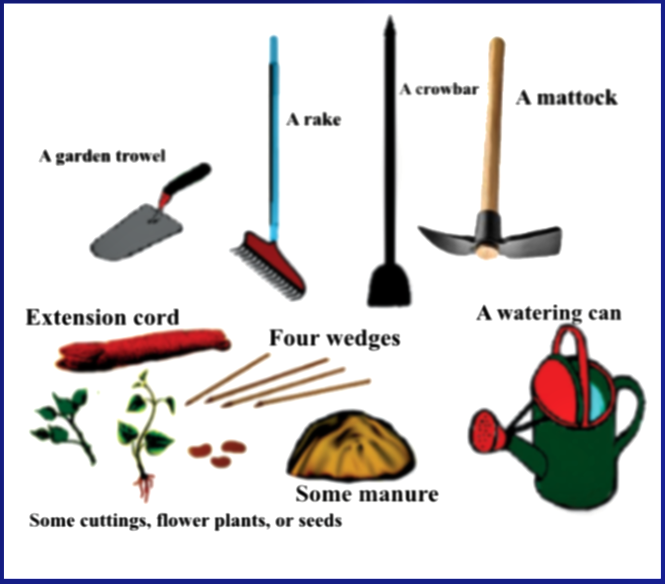
First, choose a place for the flower bed.
Mark four corners using the four wedges.
Tie the cord to the wedges.
Remove the grass cover or weeds within the marked area.
Cut the edges along the cord with the flat end of the crowbar.
Loosen the topsoil about 8 inches deep with the mattock.
Loosen the sods of earth with the rake.
If there are stones or roots, remove them with the rake or by hand.
Add enough manure.
Mix the manure and soil well.
Place bricks or stones along the boundary of the flower bed to protect soil from washing away and keep out grass and weeds.
Make holes in rows in the prepared bed for plants, cuttings, or seeds. (The number of holes should be according to the size of the plants you expect to grow)
Plant the flower plants, cuttings, or seeds in the holes.
Cover the holes with soil and press the soil lightly.
Water the flower bed.
Remove the wedges and the chord.
Put the grass and weeds into the compost barrel.
Keep the mattock, the crowbar, the rake, and the other things where they were.
Before starting your work, think about the following points.
Choose an attractive, sunny spot with a good view for your flower bed.
Start preparing the flower bed in the afternoon so that you can plant young plants, cuttings, or seeds in the evening.
You should not expose your new plants or cuttings to the hot sun.
If you replant from a nursery, water the nursery well the day before you intend to plant.
Don’t remove all the plants from their nursery and leave them exposed for long, to get withered and dry out.
Bury the plant to the depth it was in the nursery. If you bury it too deep, the stem will rot and not deep enough, the roots will dry out.
Water your newly planted bed as soon as it is planted and use sufficient water to wet the soil to settle.
Cover the soil with straw or dry leaves. It is called mulching, and mulching conserves water, blocks weeds and cools the soil. It will also improve the soil quality.
Water the flower bed regularly in the evening during the dry season.
Choose healthy plants, cuttings, or seeds for your flower bed.
If you use healthy cuttings, new shoots will appear within several days after planting.
If you plant seeds, don’t plant them too deep. It will take two to three days to germinate.
Use sufficient manure if the soil is poor.
Organic manure (compost) will help keep the soil aerated and moist at all times, as well as help feed the plants slowly.
When weeds appear, nip, prune or uproot them.