
REPORTED SPEECH
When you examine any reported speech sentence, you can see that there are two parts to it.
They are:
1 Reporting words
2 Words reported
When we report a statement, we usually use the verb ‘say ’, and to join the reporting words and words reported, we use the conjunction ‘that’. In normal conversations, ‘that’ is not used, but in writing we use it. It is very important to remember to change all the Pronouns without changing the meaning of the sentence reported.
Further, there are two ways of reporting.
Direct reporting (Direct Speech)
Indirect reporting (Indirect Speech)
When we report exact words spoken by somebody, we put them within inverted commas. Such reporting is called Direct Speech. We can’t use direct speech sentences in speaking.
When we report what another person has said, using our own words, it is called Indirect Speech. We use indirect speech sentences both in writing and speaking.
When we use a reporting verb in the past, the tense in the reported sentence goes one step back.
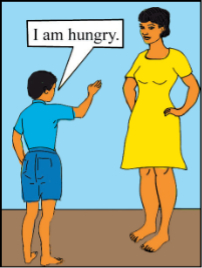
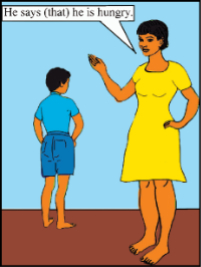
Reporting words: He says
Words reported: he is hungry.
Conjunction: that
Direct Speech: He says, “I am hungry.”
Indirect Speech: He says (that) he is hungry.
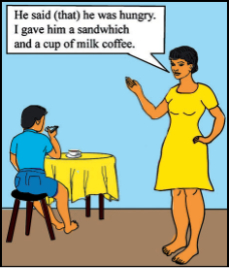
Indirect Speech: He said (that) he was hungry.
(Now, he is not hungry because she gave him a sandwich and a cup of milk coffee.)
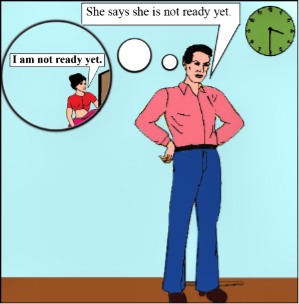
She says (that) she is not ready yet.
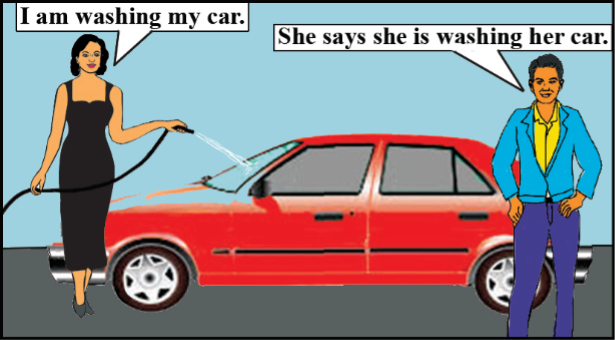
Direct speech: 1. She says, “I am washing my car.”
Indirect speech: 2. She says (that) she is washing her car.
In normal speech we omit the conjunction ‘that’ but in writing we
usually use the conjunction ‘that’.
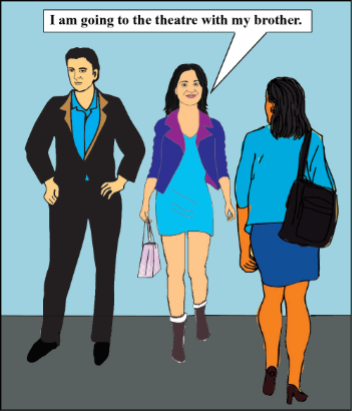
Nisha: I am going to the theatre with my brother.
Nisha says (that) she is going to the theatre with her brother.
Ben: She is my sister.
He says (that) she is his sister.
He says she is his sister.
Tense Change in Reported Speech
Turning Direct Speech into Indirect speech (Reported Speech) is not a difficult process. But we find that beginners make a lot of mistakes, mainly because they do not understand very clearly how the verbs change with the flow of time.
When we report something in the past, we view the words reported from a different perspective. The speech is now remote, and we see it as an event or sequence of events in the past. So, each verb changes accordingly.
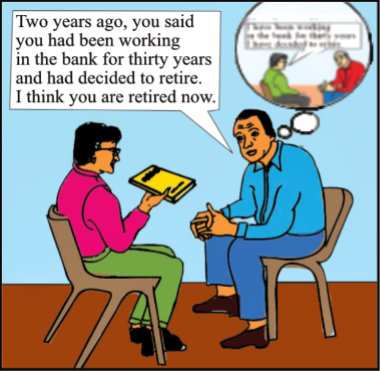
Man: Two years ago, you said (that) you had been working in the bank for thirty years and had decided to retire.
I think you are retired now.
Tense change
I have been working > you had been working
I have decided > you had decided
She says she is not ready yet.
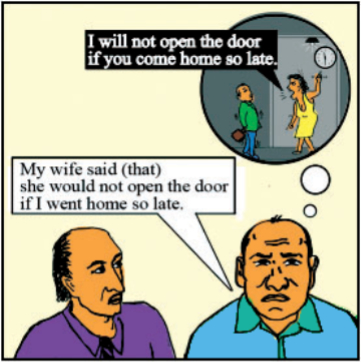
My wife said (that) she would not open the door if I went home so late.
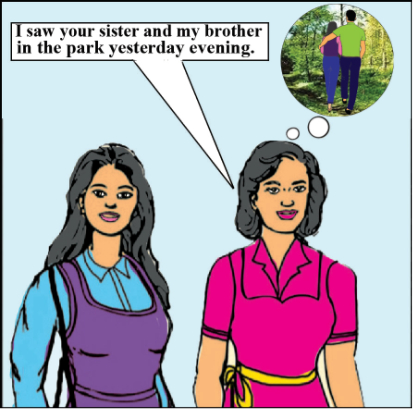
Sara: I saw your sister and my brother in the park yesterday evening.
Last Monday, Sara said (that) she had seen my sister and her brother in the park the previous evening.
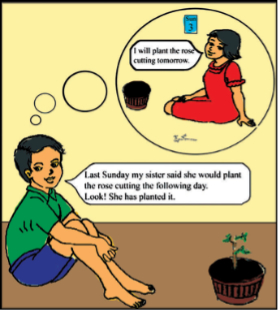
Sister: I will plant the rose cutting tomorrow.
I: Last Sunday, my sister said she would plant the rose cutting the following day. Look! She has planted it.
Reporting Inversion Questions
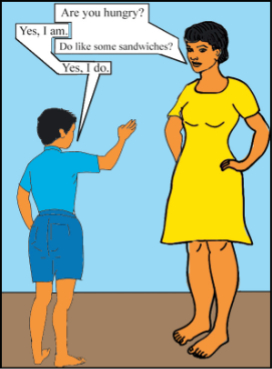
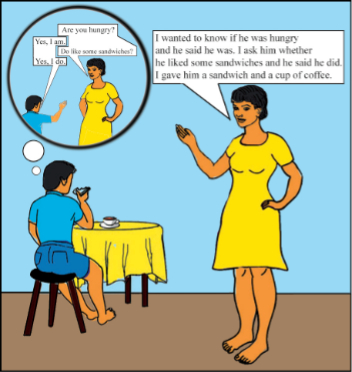
Sister: Are you hungry? Brother: Yes, I am. Sister: Do you like some sandwiches? Brother: Yes, I do.
Later, his sister reports: I wanted to know from my little brother if he was hungry, and he said he was. I asked him whether he liked some sandwiches, and he said he did. I gave him a sandwich and a cup of coffee.
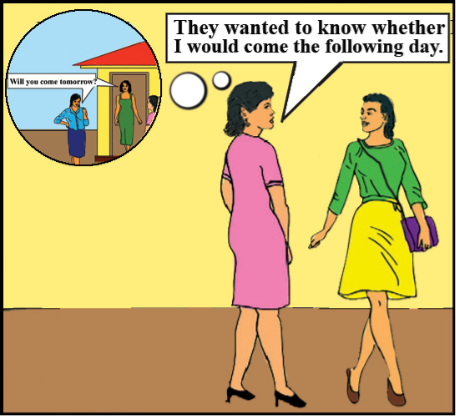
They: Will you come tomorrow? They wanted to know whether I would come the following day.
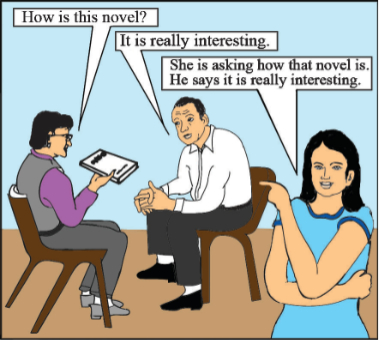
She is asking how that novel is. He says it is really interesting.
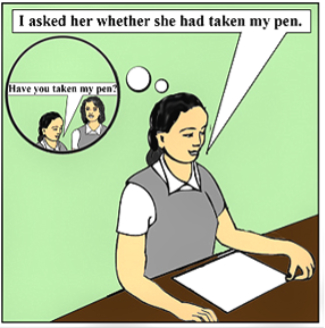
I asked her whether she had taken my pen.
Reporting Interrogative Questions.
The interrogative questions begin with one of the following words.
Who Whom
Whose What
Which When
Where Why
How
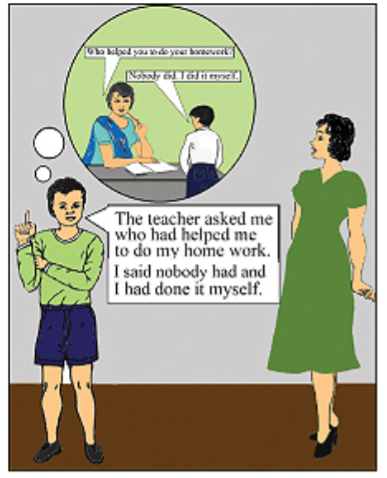
The teacher: Who helped you to do your homework?
Later, the boy told his mother: The teacher asked me who had helped me to do my homework. I said nobody had, and I had done it by myself.
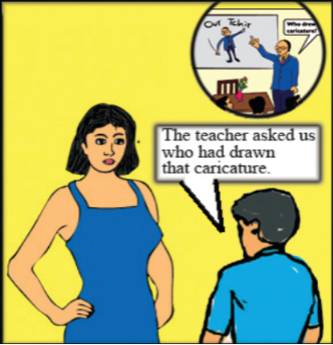
The teacher asked us who had drawn that caricature.

Our English teacher asked me whether I had done my homework. I said I had.
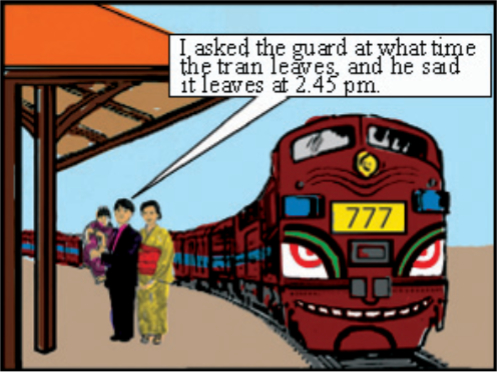
I asked the guard at what time the train leaves, and he said it leaves at 2.45 pm.
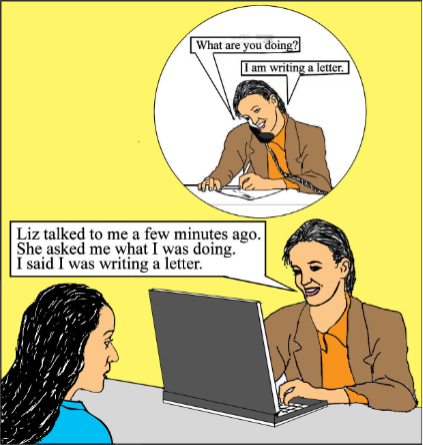
Liz:  What are you doing?

I: I am writing a letter.

Liz talked to me a few minutes ago. She asked me what I was doing.

I said I was writing a letter.

Changes:

Are you > You are > I am >I was

 I am >I was
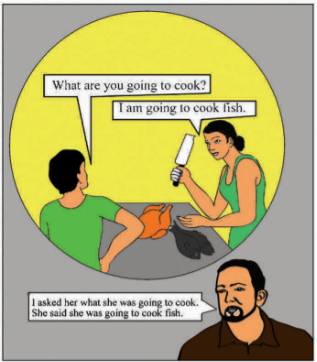
I: What are you going to cook?
Wife: I am going to cook fish.
I asked her what she was going to cook. She said she was going to cook fish.
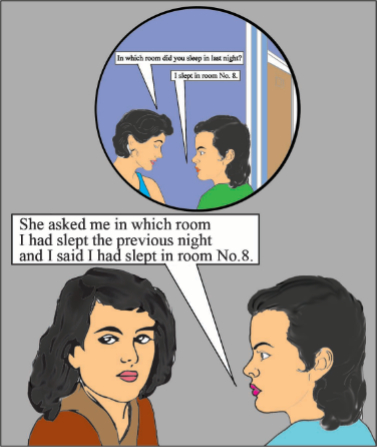
She asked me in which room I had slept the previous night, and I said I had slept in room No.8.
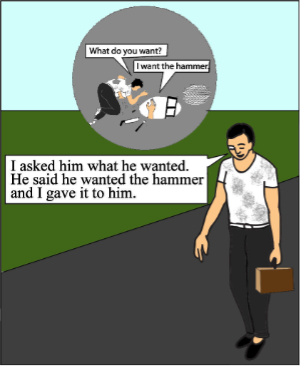
I asked him what he wanted. He said he wanted the hammer, and I gave it to him.

The teacher asked us where Sri Lanka is.
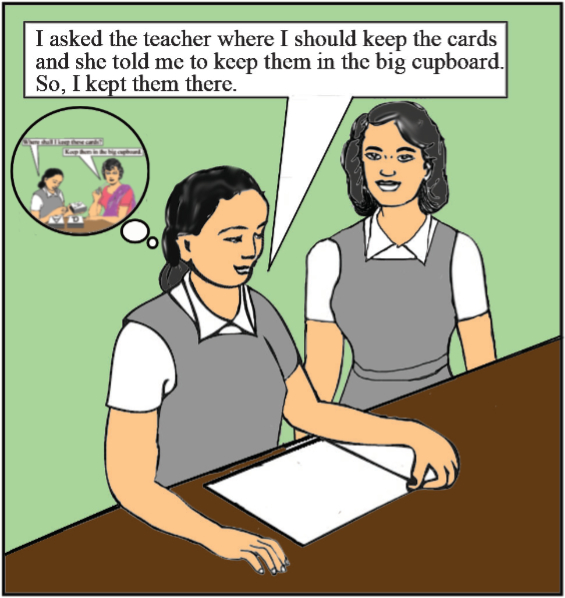
I asked the teacher where I should keep the cards, and she told me to keep them in the big cupboard. So, I kept them there.
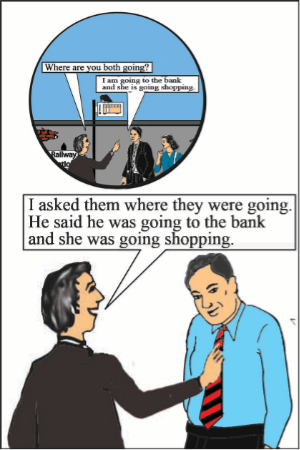
I asked them where they were going. He said he was going to the bank, and she was going shopping.
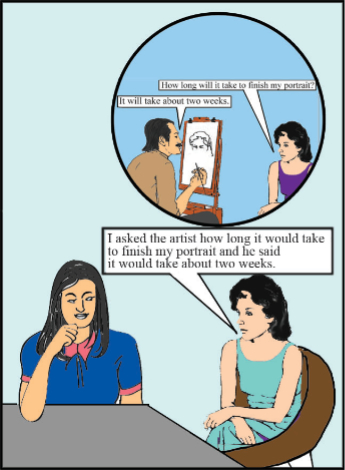
I asked the artist how long it would take to finish my portrait, and he said it would take about two weeks.
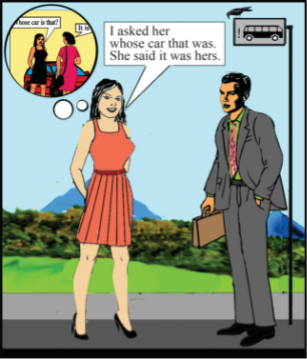
She asked me whose car that was. I said it was mine.
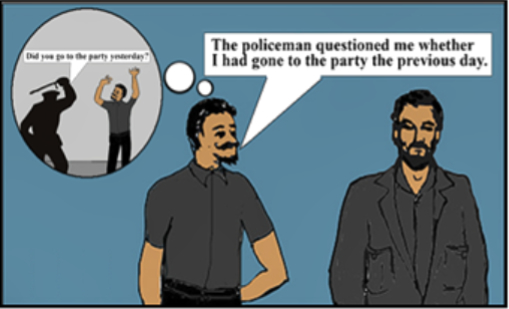
The policeman questioned me whether/ if I had gone to the party the previous day.
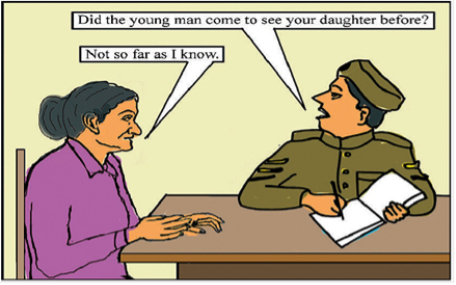
The policeman is interrogating her to know whether the young man had come to see her daughter before.
Study these pictures and see how reporting is done by using the sentences given.
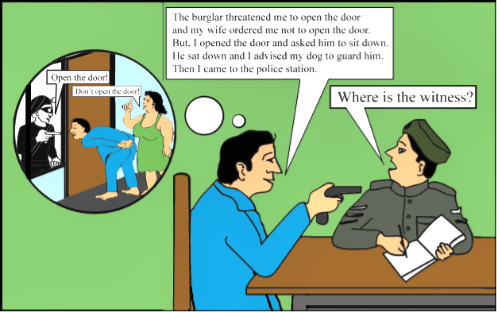
The burglar: Open the door!
The burglar said to the man in the house, “Open the door!”
The burglar asked the man to open the door.
The woman: Don’t open the door!

The woman ordered her husband, “Don’t open the door!”

The woman ordered her husband not to open the door.

(The man opened the door.)

The man:  Please come in!

The man said to the burglar, “Please come in!”

The man invited the burglar to come in.

The man:  Please sit down!

The man said to the burglar, “Please sit down!”

The man requested the burglar to sit down.


The burglar sat down

The man said to the dog:   Protect him!

The man said to his dog, “Protect him!”

The man ordered his dog to protect him.


The man locked the door and came to the Police Station.

The policeman: Where is the witness?

The policeman said to the man, “Where is the witness?”

The policeman asked the man where the witness was.
“The burglar threatened me to open the door, and my wife ordered me not to open the door. But I opened the door and invited him to come in and sit down. He came in and sat down, and I ordered my dog to guard him. Then, I came to the police station.”