Introduction
The grammar of a language is its skeleton. If there is any defect in any part of the skeleton, that part of the body becomes deformed. That is why learning grammar is highly important. Grammar can never be taught or learnt without visual pictures and contextual words or sentences.
If you read a word, words, or a sentence without the contextual picture when learning a new language, your brain orders you not to waste time on useless activity, and the result will be abandoning the idea of learning that language. Grammar can never be taught or learnt without visual pictures and contextual words or sentences. When you see a new word with a visual representation, the brain processes the information through both its visual and verbal channels, rousing your interest to go further in search of finding more and more pictures which help you to gain more knowledge through that language.
Please follow the pictures, words, and sentences given below.





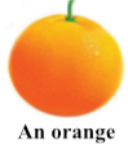


No translation needed when you see the picture and the word together. The brain processes the image and word together.
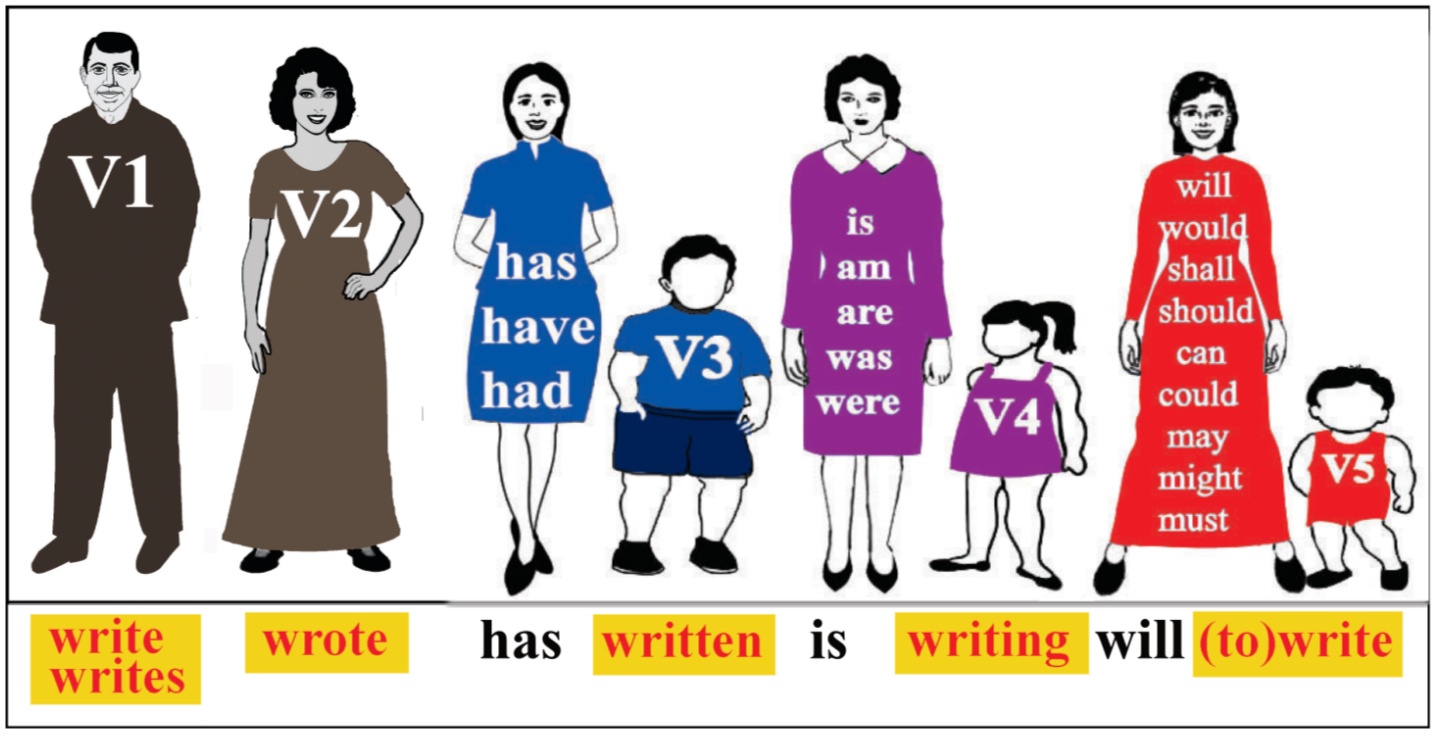
The following pictures show you how tenses help to convey the flow of time in English.

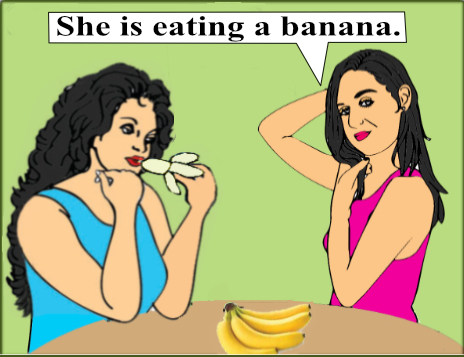
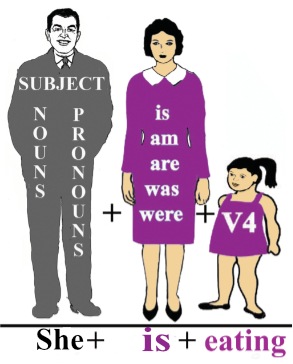
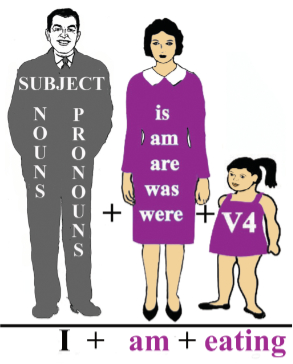
Present Progressive sentence pattern
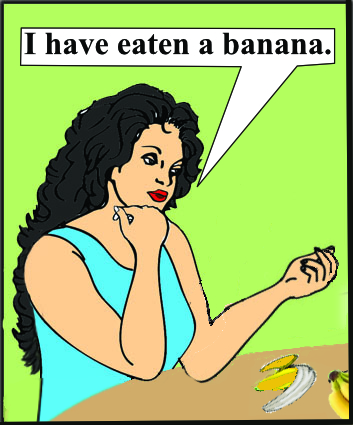
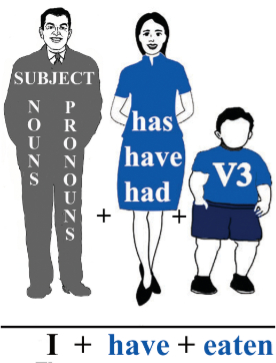
Present Perfect sentence pattern
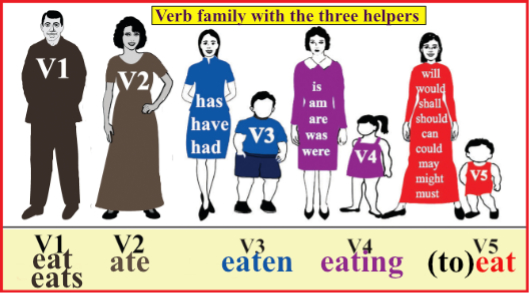
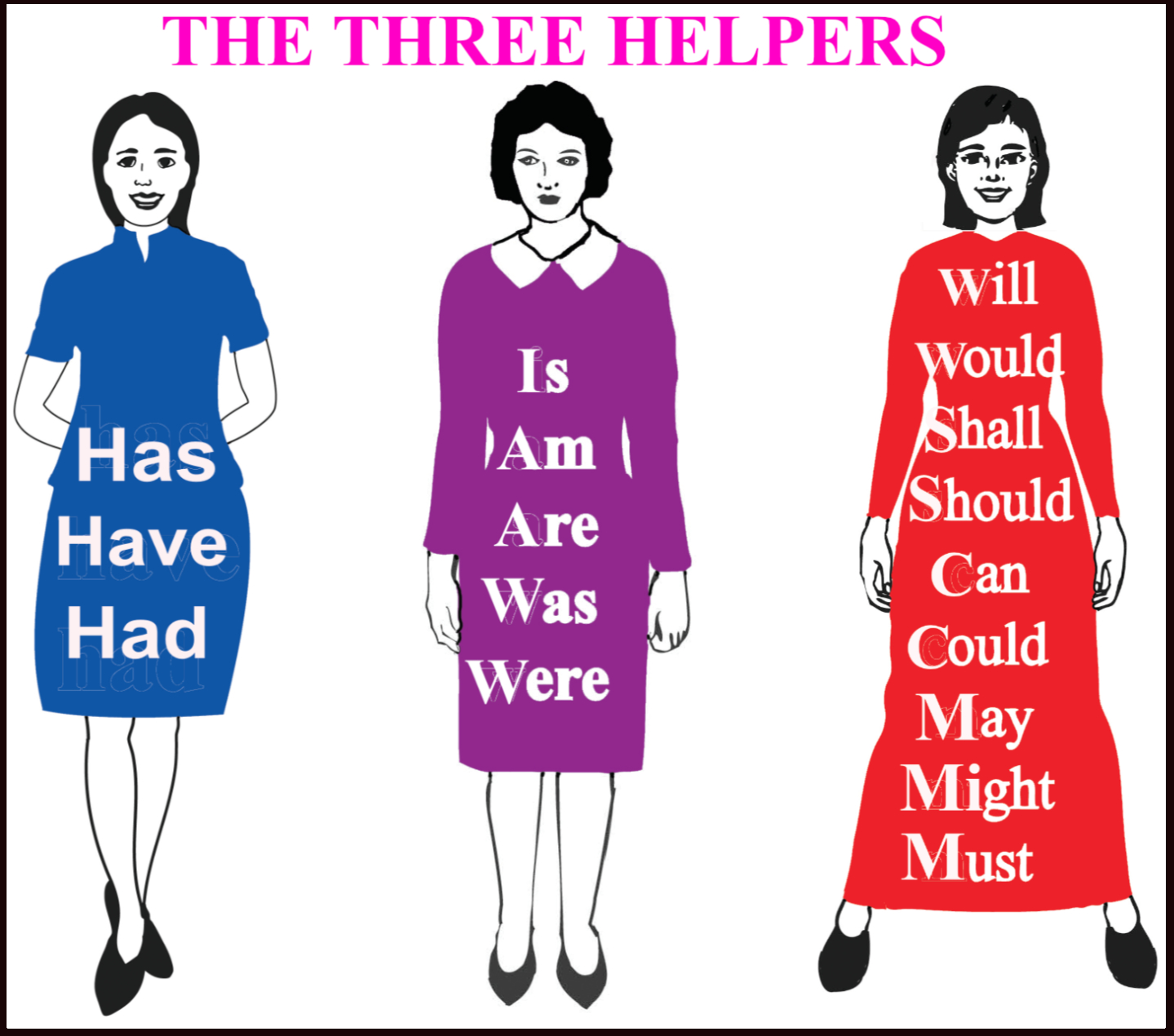
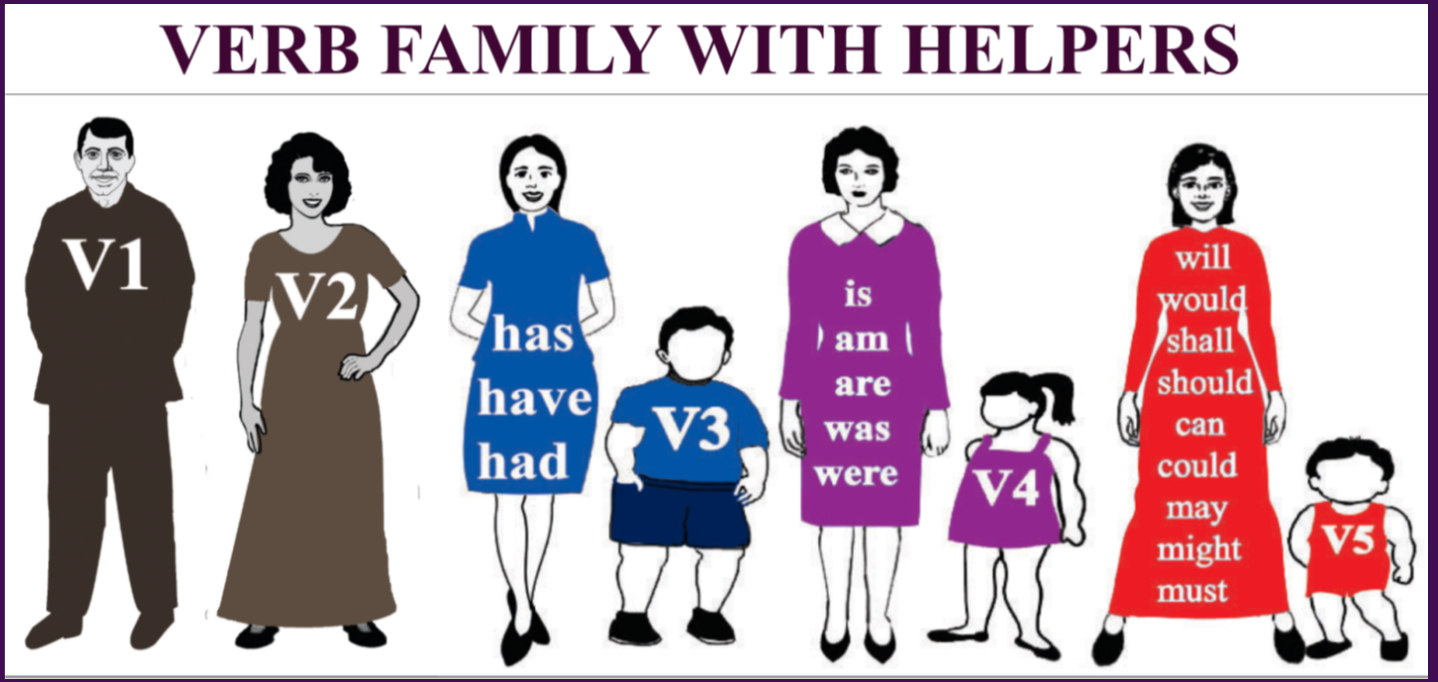
Now you know why Past Participle(V3) and Present Participle (V4) cannot be used without the helping verbs.
 This is a picture of a Unicorn. You can’t find a Unicorn in the real world be
cause it is a mythical creature. But you can find horses in the real world. 
Although a born blind person can’t see the sun, he or she can feel the warmth of it. You can never give a perfect idea about the sun to a blind person using hundreds of words because words are always associated with visuals. In the same manner, trying to teach or learn the grammar of a language without visuals is just a waste of time and energy.
A language is a system of sound symbols developed by a particular race or a nation to communicate ideas, feelings or desires. All human knowledge has been stored as sound units in a language. Growth of a language depends upon how many new sound symbols are added to it each day. Each new sound symbol extends the horizons of human knowledge. The more sound symbols you understand in a language, the better knowledge you have acquired.
The human learning process begins with the understanding of sounds created by man. From the very moment our ears start functioning, we begin to record in our memory system all the sounds we hear. Recording sounds and understanding sounds are two different things, wide apart. Recording sounds signals us familiarity with a sound, and understanding sounds signals our knowledge of a sound.
Knowledge, let us call learning, has its starting point. Learning one’s mother tongue always begins at this very correct starting point. That is why during infancy children learn so fast. In teaching a second language, most teachers and textbook writers forget or neglect to take their new learners to the correct starting point. Most learners of English as a second language complain that they are confused, perplexed and stranded in the dense jungle of English. Almost all the students who came to me to learn English were utterly confused, and I had to struggle- it is a real struggle- to lead them to the correct starting point. The other problem I have always faced with, has been their lack of understanding of the formation of sound units in a language. When a student is asked to read something, he always breaks sentences in wrong places. If he is asked to read ‘Please, keep the book on the table!’, he is sure to read it as ‘please keep the….book on the….table’. Most users of English as a second language make this type of mistake universally. They have missed, I think, their correct starting point and lost their way in the jungle of English.
The beauty of a language lies with the native speakers because they use it with feelings. First they feel, and then they talk. Second language users learn it and then speak it. They seldom feel it. To solve these problems in learning a second language, we must understand how the language learning process works in us.
We, humans, can record all the sounds we hear in our memory and have the necessary mechanism to reproduce most of them through our vocal organs. Our memory capacity is so large that we can learn any language if we wish to, and if we use the correct methodology we have so well developed through generations. The physical eye and the mind’s eye play the main role in our learning process, and physical activities contribute much to complete the learning process.
I would explain how the language learning process works in you. You just try to recollect how you learnt a particular word; say the word “crow”. When you were a baby, your mother or somebody showed you a crow, made the sound “crow” and asked you to repeat it. So you recorded the picture and the sound together as a unit. Later you learnt the sound made by a crow and learnt the word (verb) “caw” and added it to the unit. Now, whenever you want to recall the word “crow”, the picture and the sound come together. If you have learnt to write the sound symbols, the words “crow” and “caw” also appear at the same time. That was how you learnt all those words (nouns) you know. But action words (verbs) were much more difficult for you to learn. You took a very long time to understand the flow of time and the time factor entangled with the action words (verbs). So you find the same difficulty in learning verbs in a second language, and it takes time to feel the flow of time in the second language.
All your problems and difficulties in learning a second language have been well understood and dealt with, giving you nearly perfect solutions in this very special English language course. Follow it well and practice regularly. You are sure to feel the fun of learning English so easily and so quickly.
Thanks…
First of all, my thanks go to my beloved parents for guiding me to be a global citizen and serve mankind even in a minute way possible. Thanks to the computer world who developed it up to the present worldwide level, for enabling me to serve the world in this manner.
My best thanks go to my son Megha for giving me the idea to create a website to help those who wish to learn English all over the world.
Finally, I thank all my students for helping me to test these materials in class for many years and to develop this type of English course.
– Amarasiri Ganewatta
Your Quest
We see the world in 3D through language. If you can express everything you see in 3D using any language perfectly correctly, that means you have mastered that language.
Look at this picture below and fill in the speech bubbles using your mother tongue.
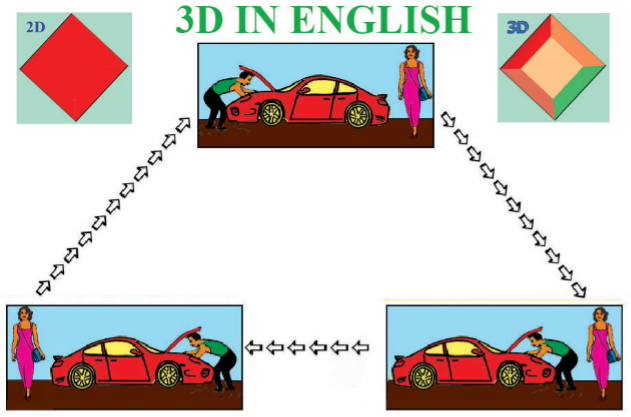
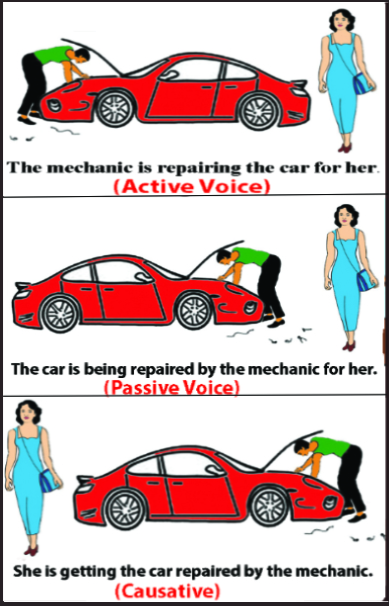
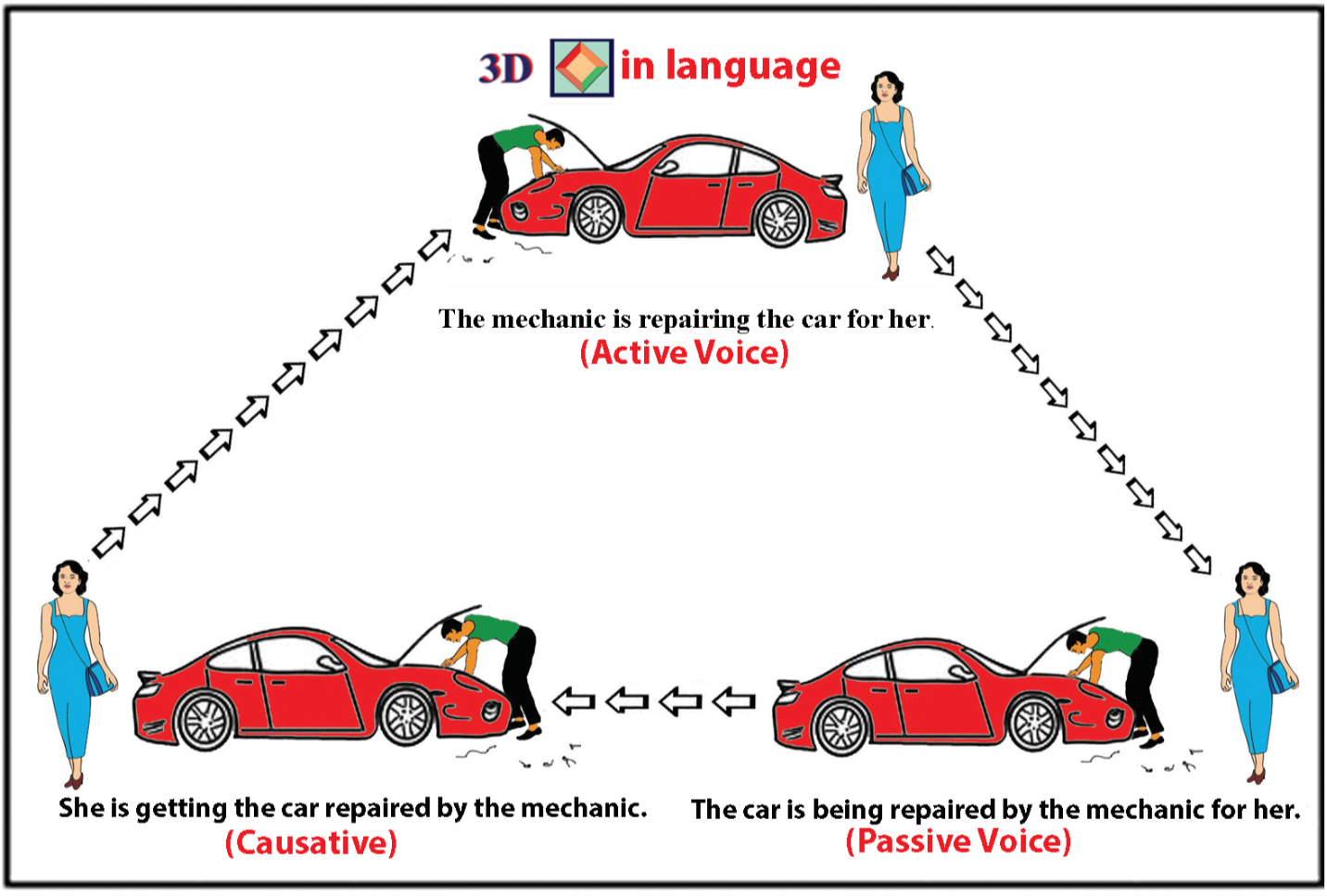
I ………………….. (repair)
The mechanic : ……………………………………………………………………
The car : ……………………………………………………………………
The owner : ……………………………………………………………………
Are you successful? Yes/No
If you are not, go to Lesson 10
You can learn English easily in 3D way by following this very special course. If you follow it well and practice regularly, you will definitely be successful.
Note:
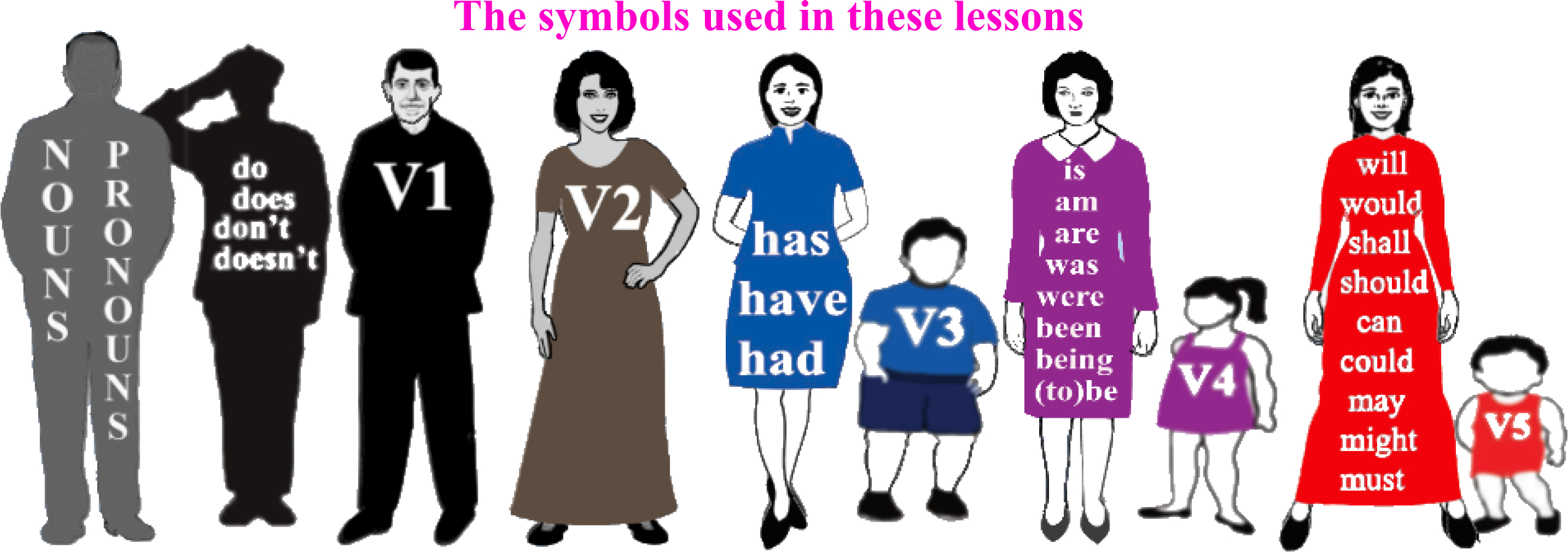
The following symbols have been used throughout the course.
| S | Subject |
| V | Verb |
| O | Object |
| IO | Indirect object |
| DO | Direct object |
| IV | Intransitive verb |
| TV | Transitive verb |
| AV | Auxiliary verb |
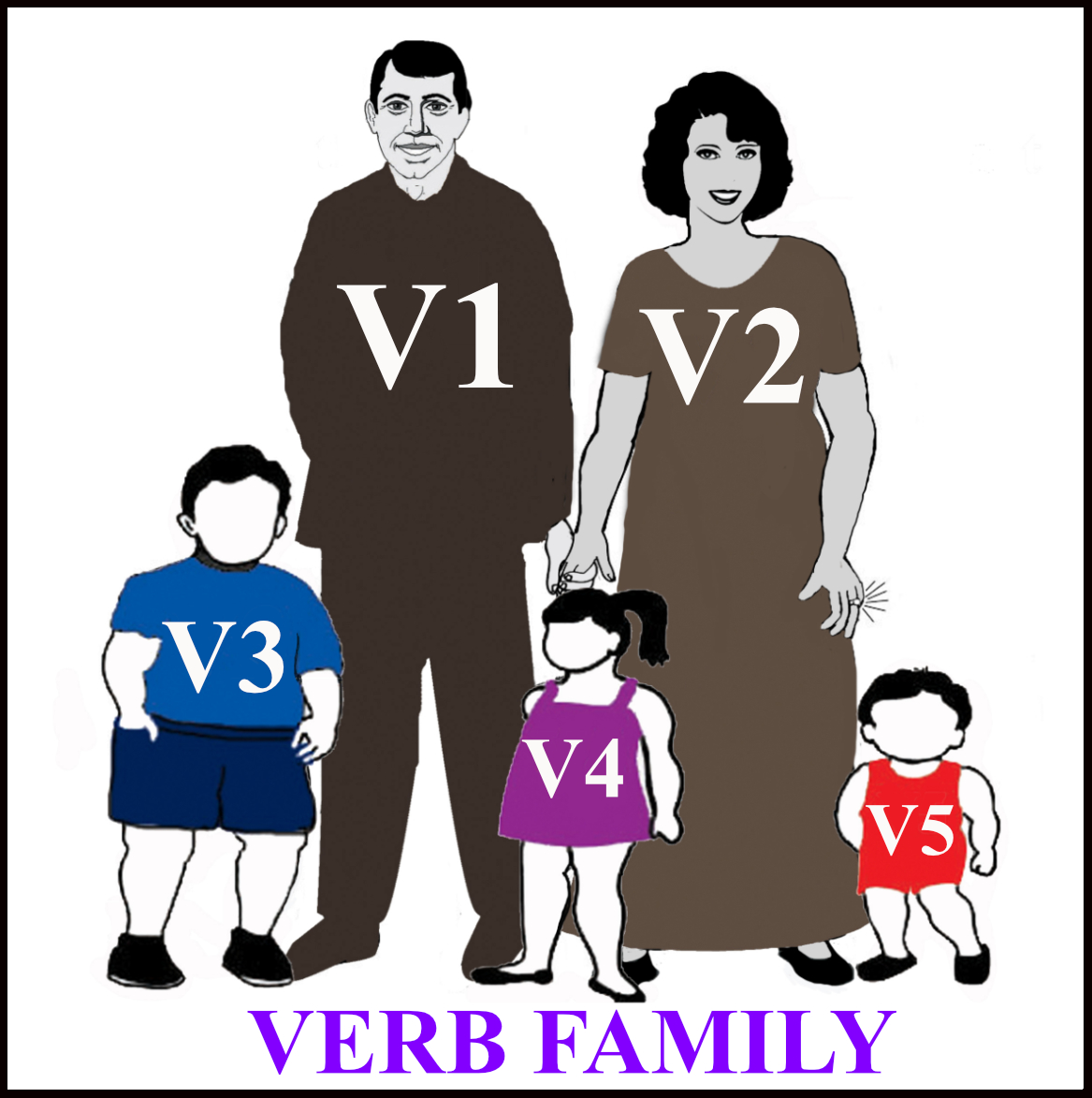
| V1 | Present |
| V2 | Past |
| V3 | Past participle |
| V4 | Present participle |
| V5 | Infinitive |
| V6 | Gerund |
Meet the verb family. Wish you success!
The concept of the English verb family picture was created for the book ‘UNDERSTANDING THE ENGLISH VERB’ published in 2005 by the author Amarasiri Ganewatta. You won’t find this concept in any other grammar book published by other authors.