There are three types of sentences.
They are:
1. SIMPLE SENTENCES
2. COMPOUND SENTENCES
3. COMPLEX SENTENCES
———————————————————————————————————————————————
SIMPLE SENTENCES
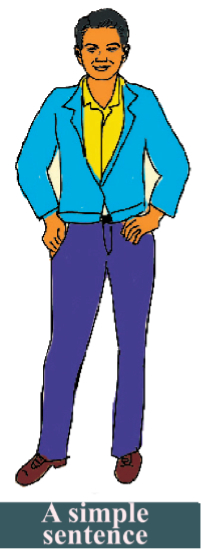
A simple sentence contains one thought or idea. So it has only one finite verb.
Example:
I went to Sri Lanka last year.
———————————————————————————————————————————————
COMPOUND SENTENCES
A compound sentence contains more than one thought or idea. So such a sentence has more than one finite verb and all sentences in a compound sentence are equal in value. They are joined with co-ordinate conjunctions.
Example:
Last year, I went to Sri Lanka and visited many places of interest.
Last night, I went home late, opened the door, switched on the lights and saw a thief in the house. I tried to catch him but he escaped through the front door.
———————————————————————————————————————————————
COMPLEX SENTENCES
A complex sentence has one main sentence and one or more subordinate sentences. A sentence with one main idea and one or more relevant background ideas is called a complex sentence. These background sentences qualify nouns and modify verbs in the main sentence. We call a main sentence a MAIN CLAUSE and a subordinate sentence (a background sentence) a SUBORDINATE CLAUSE in grammar.
Example:
The man who is reading the paper is Mr Brown.
The man who is reading a magazine is Mr Green.
(The underlined sentences are adjective clauses. They modify the noun ‘The man‘.)
———————————————————————————————————————————————
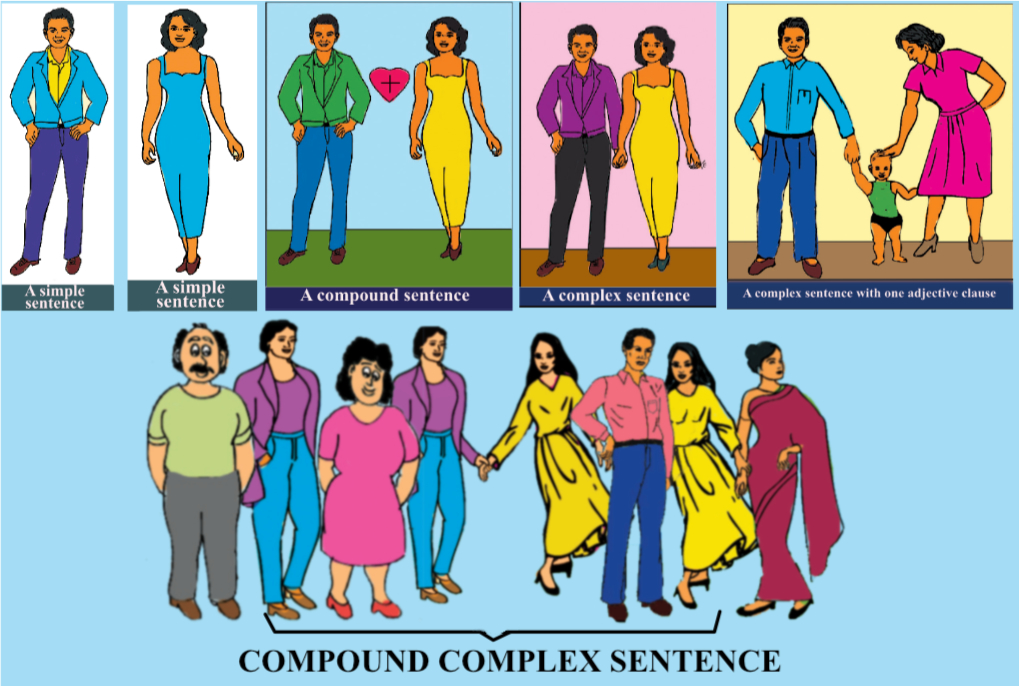
Now, look at these pictures and learn how to modify a verb.
WE can modify a verb by using sentences to give the time, the place, the manner, the cause, the condition, etc., of an action. We can describe a noun by adding adjective clauses after the relevant noun.
SYMBOLS USED HERE:
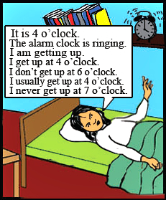
It is 4 o’clock. The alarm clock is ringing. I am getting up. I get up at 4 o’clock. I don’t get up at 6 o’clock. I usually get up at 4 o’clock. I never get up at 7 o’clock. (Simple sentences)
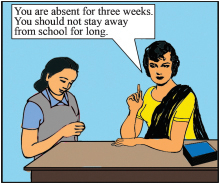
You have been absent for three weeks. You should not stay away from school for long. (Simple sentences)
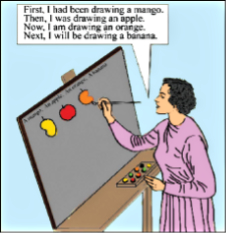
First, I had been drawing a mango. Then, I was drawing an apple. Now, I am drawing an orange. Next, I will be drawing a banana. (Simple sentences)
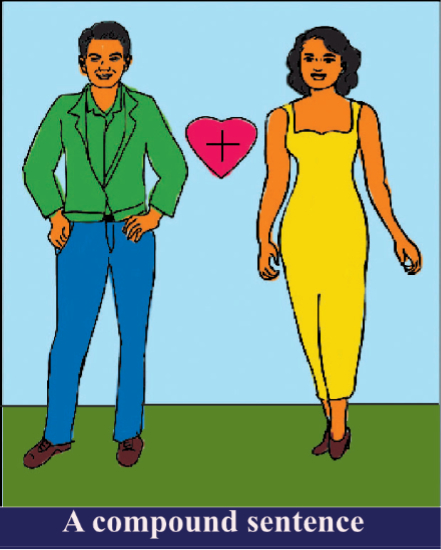
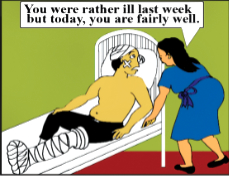
You were rather ill last week, but today you are fairly well. (Compound sentence)
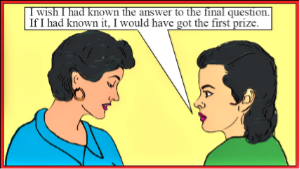
I wish I had known the answer to the final question. If I had known it, I would have got the first prize. (Complex sentences)
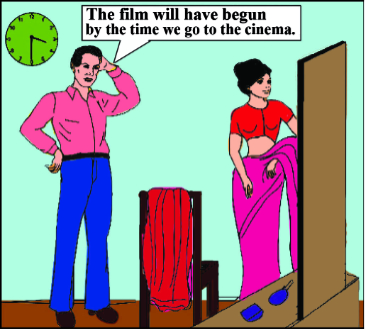
The film will have begun by the time we go there. (Complex sentence)
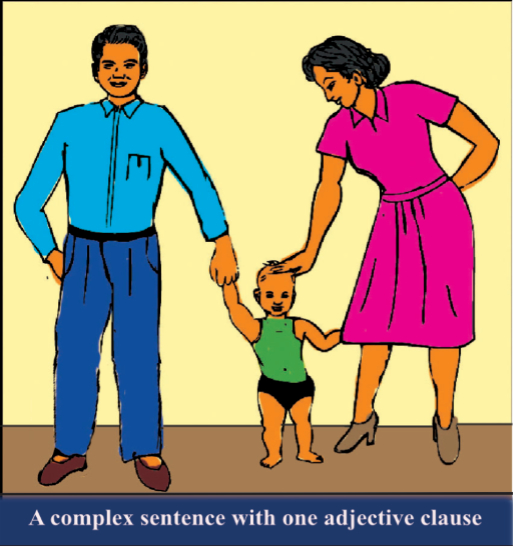
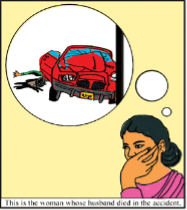
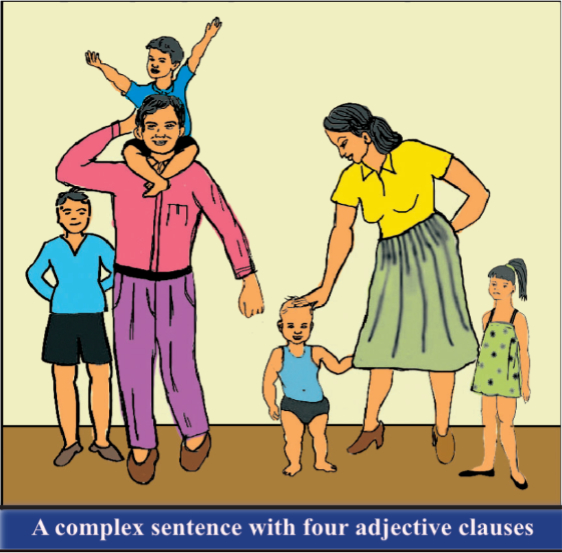
This is the woman whose husband died in the accident. (Complex sentence with one adjective clause))
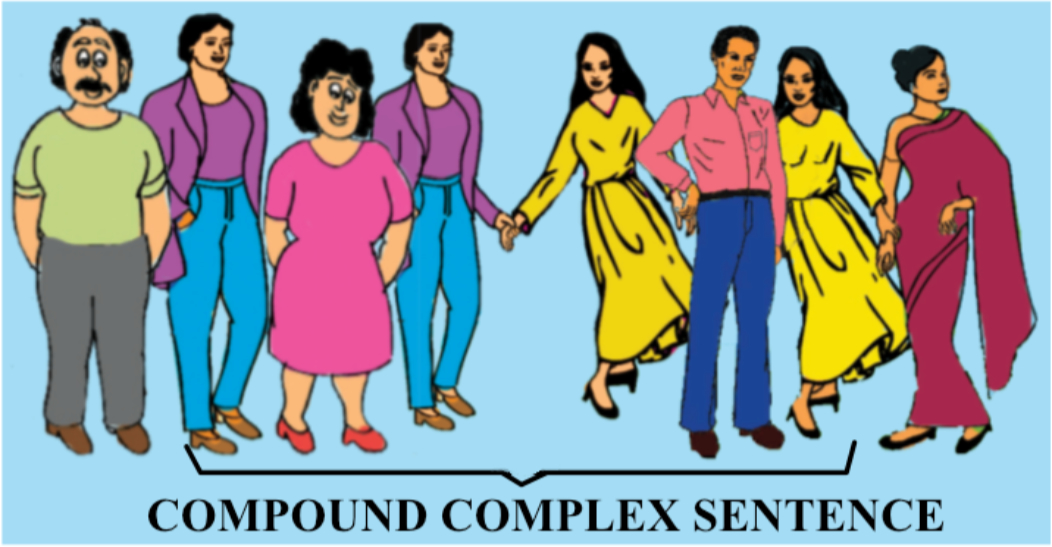
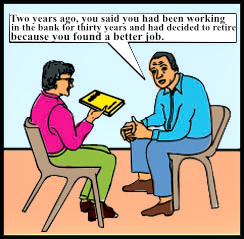
Two years ago, you said (that) you had been working in the bank for thirty years and had decided to retire because you found a better job. (Compound complex sentence)